History of Emmanuel
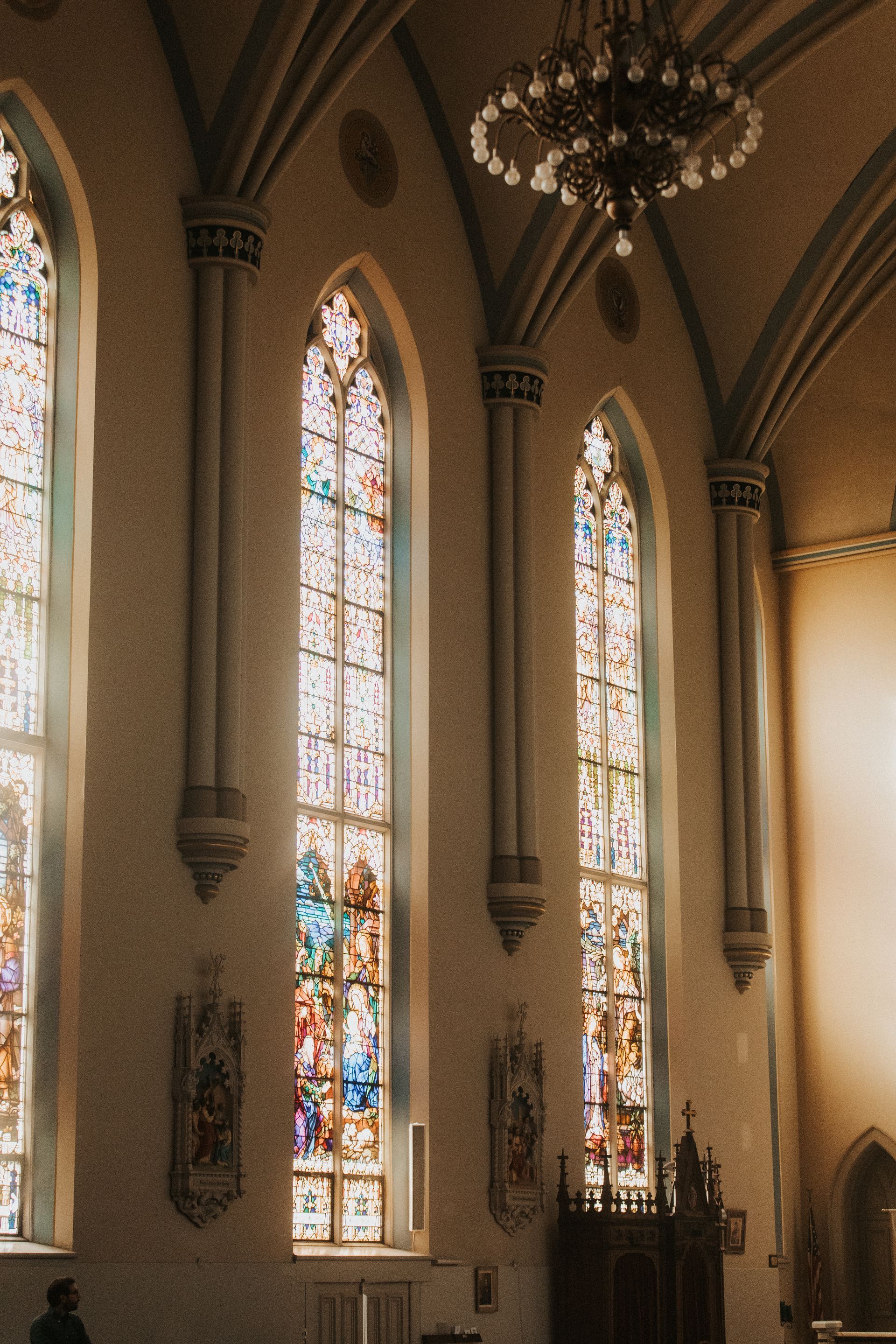
Emmanuel was the first Catholic Church established in Dayton, Ohio, in 1837. In the early years, Emmanuel was predominantly a German territorial parish, founded by Fr. Emmanuel Thienpont. The first church was built in 1837; the second, and current, church building was built in 1871 and is one of the largest in the Archdiocese of Cincinnati: 166 feet by 84 feet, with a ceiling height of 65 feet.
In 1869, Fr. John Hahne formulated plans for a new church building due to the deteriorating condition of the old church, which stood on the site of the present rectory. Leon Beaver, a Dayton architect, drew plans for a German Gothic structure with no supporting pillars on the side aisles, lending to an unobstructed view of the altar. Also in the plans were two balconies, one for the choir and organ and the other for the school children.
The first foundation stone was laid on September 8, 1871. Andrew Kinninger and Frederick Lampert built the structure of soft brick, trimmed in Dayton limestone. The dedication of the completed church building occurred on October 5, 1873, by Bishop Borgess of Detroit and was attended by nearly 10,000 people. The final cost for the new church was $93,000.
The church has experienced many historical moments. In 1912 a cement stucco rock face was put over the church; however, all limestone trim was left in its natural state. In 1913 the church survived the Great Flood, during which the floodwaters reached the height of the windowsills inside the church. In 1920 a windstorm blew down the 150-foot rear spire. The Church originally had twin spires, 212 feet in height, with 8 clocks facing all directions. These spires were removed in 1956 due to wind damage.
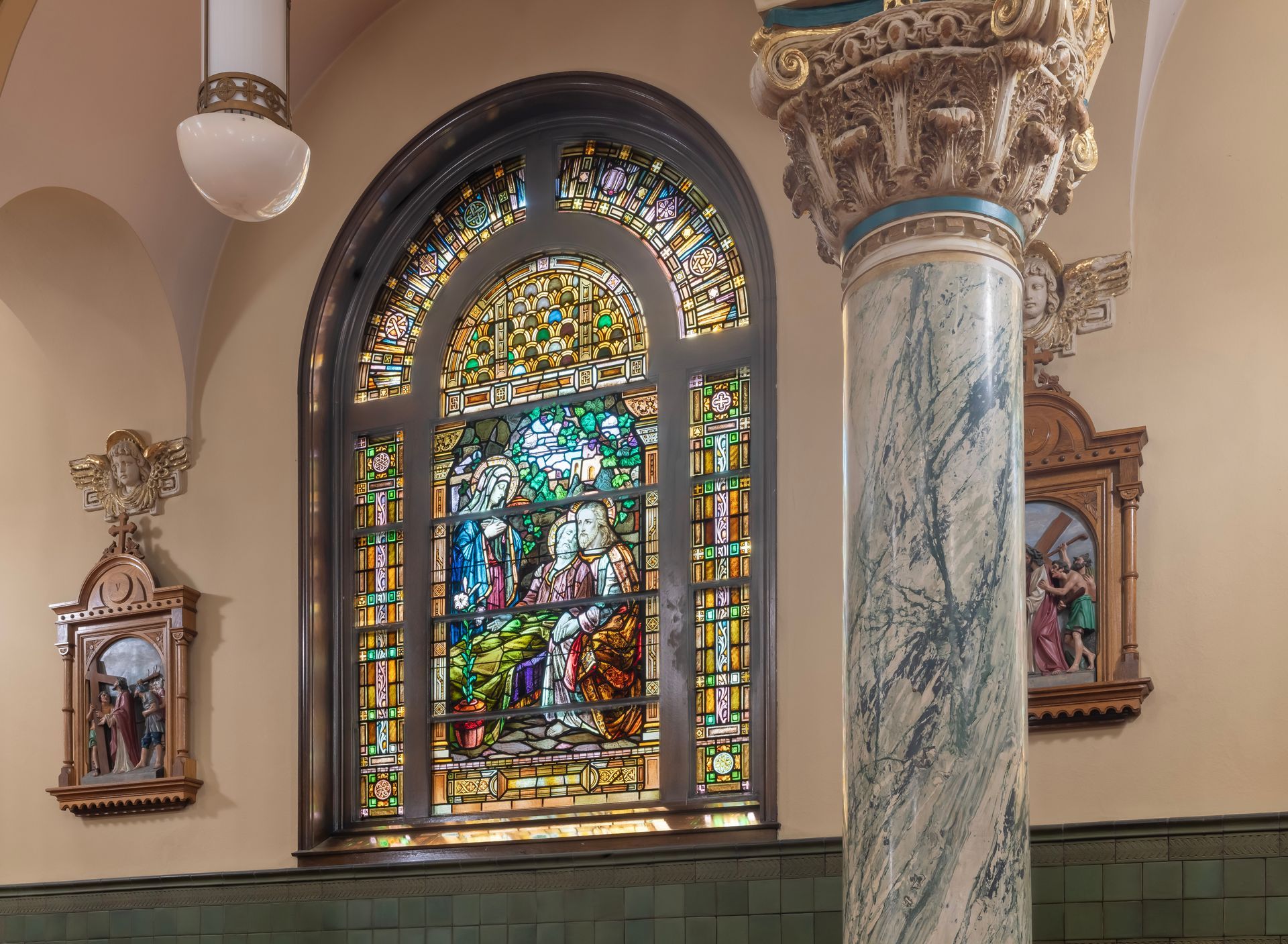
The Emmanuel window over the main altar honors the Blessed Sacrament with angels in adoration. The other 14 stained glass windows, 6 feet by 40 feet, depict the life of Christ. The Stations of the Cross, polished bronze and marble altar railing, aisle floors, and two great chandeliers date from the 1895 to 1897 redecoration.
From 1837 to 1956, Emmanuel was staffed by Diocesan Priests. The Marianist Order staffed the church from 1956 to July 2011. In July 2011 the Marianists turned over control to the Precious Blood priests and brothers, who continue to maintain the church’s day-to-day operations. May God bless the staff, who can be proud of their strong heritage; the parishioners; and all who come to worship in Emmanuel Church.
History of Holy Triniy
Holy Trinity Church traces its roots back to the late 1850s, when the rapidly growing German-speaking population at Emmanuel Church led to severe overcrowding. While plans were made to build a new St. Mary Church to address the issue, many German immigrants living near Fifth and Bainbridge Streets found this solution inadequate for their community’s needs.
Initial appeals to the Archdiocese of Cincinnati were met with resistance. The pastor of Emmanuel Church at the time even declared, ” All those who leave the mother church are going out of heaven.” Despite these challenges, Holy Trinity’s founders’ determination only deepened.
In April 1859, they took a bold step forward, purchasing three lots as the future site of their church. Although there was significant disagreement within church leadership—particularly from the Chancellor, who opposed the project in the Archbishop’s absence—the Archbishop ultimately approved the plan upon his return.
While there are no surviving records of the groundbreaking ceremony, the cornerstone of Holy Trinity Church was laid on May 17, 1860. The outbreak of the Civil War delayed construction, and the church was not dedicated until August 15, 1861. Built of red brick and measuring 130 by 60 feet, the structure was brought to life by laborers who, in many cases, were paid in groceries rather than wages. The finishing touch—our iconic steeple—was completed in 1868.
Holy Trinity has always been dependent on lay involvement. From the persistent first founders through the service of many religious communities—even through flood, depression, wars, and urban change—the laity of Holy Trinity Church have served others humbly and loved others as themselves. Parishioners regularly volunteer in soup kitchens, pro-life activities ,health ministries, bereavement ministry, social action projects, and numerous other community-wide events. Our annual Christmas Bazaar uses all profits to help the poor. Ministers visit and bring Communion to shut-ins and the hospitalized.
Many of our community live out their baptismal call as Eucharistic ministers, choir members, ushers, and servers who bring our liturgy to life. Countless people give of their skills as gardeners, cooks, electricians, and computer experts, as well as in construction and maintenance, keeping our grounds beautiful and our projects thriving.
History of St. Joseph
St. Joseph Catholic Church in Dayton, Ohio, was founded in 1846 by Irish priest Father Patrick O’Mealy to serve the city’s growing English-speaking Catholic population of Irish descent. Originally part of Emmanuel Church, the parish was named after St. Joseph, whose statue stood on the right side of Emmanuel, where its founders had worshipped.
The growing number of English-speaking Catholics (primarily Irish) in Dayton, Ohio, in the 1840s made it necessary to form a new parish separate from the city’s only Catholic Church, Emmanuel, which was German-speaking. Therefore, Bishop John Baptist Purcell appointed newly ordained Father Patrick O’Mealy, a native of Limerick, Ireland, to begin the first English-speaking Catholic parish in Dayton.
Father O’Mealy held a meeting on November 1, 1846, and plans for the new parish in Dayton were underway. Most English-speaking parishioners at the meeting were Irish, lived on the East Side, and were anxious about a new church. Before the month was out, they had purchased two lots, 100 by 150 feet, for $2,000. They hired a contractor who immediately stockpiled materials at the location of the new church.
The brick church, dedicated in October 1847, was in the Grecian style of the central steeple type. However, the steeple was not completed due to a lack of funds.
Over the next decade, several pastors, mostly of Irish descent, led St. Joseph Church. Then, in 1859, Father David J. Kelly, a native of Ireland, took another step toward finishing the church. He completed the steeple building, following the original plan of the church. He also had a town clock installed in the tower. The largest bell in town hung in the tower. It weighed 3,600 pounds and was made in Cincinnati. It was christened “Patrick.” This is the same bell we have in our church today.
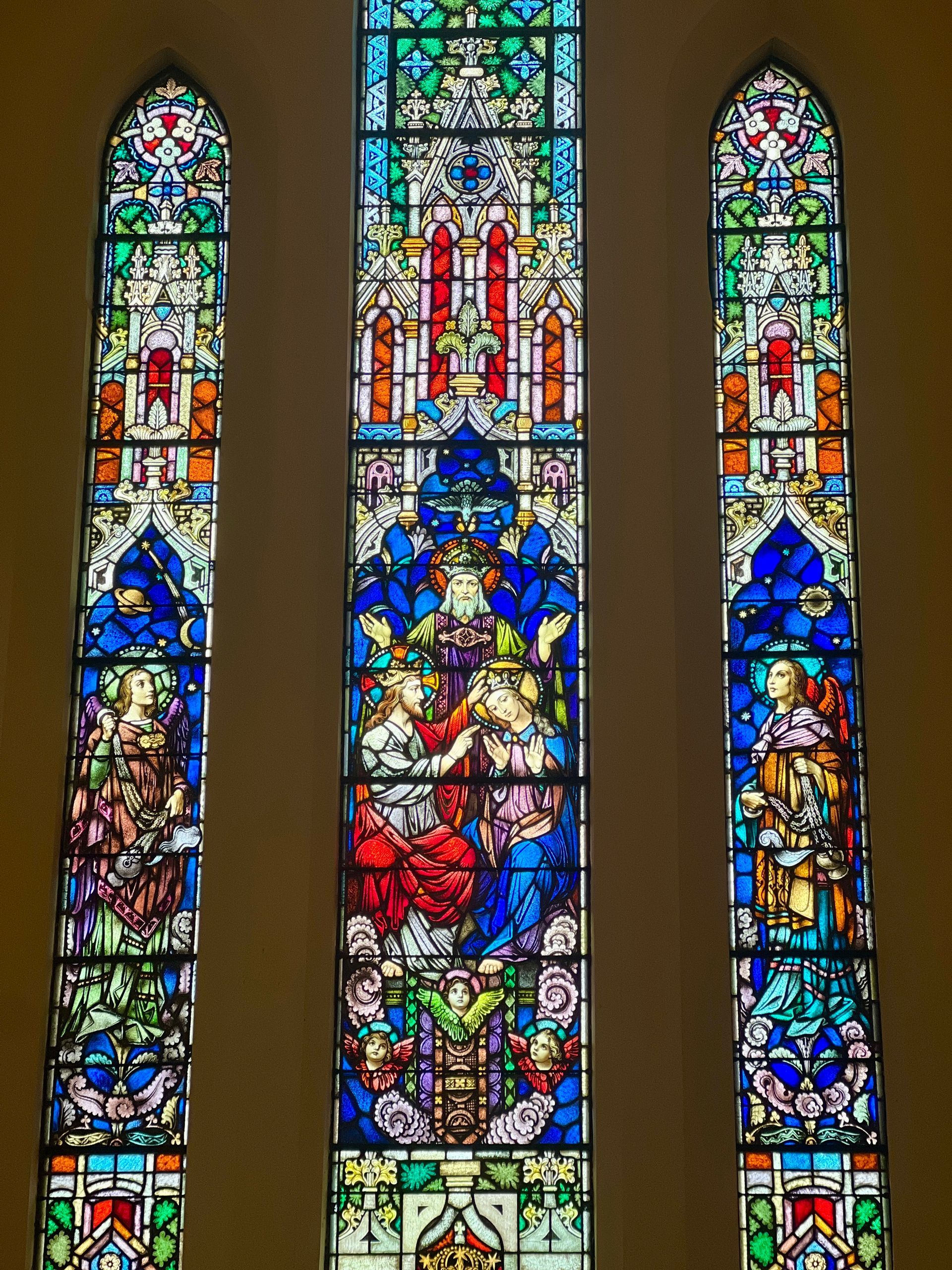
By 1905, the original church was no longer sufficient, leading to the construction of the current Italian Byzantine-style building designed by McGinnis and Walsh of Boston. Parishioners temporarily worshipped in a makeshift church while the new structure was built. The cornerstone was laid in 1909 by Archbishop H. K. Moeller, and the church was completed in 1910 for $95,700. Notable features include its distinctive tower set back toward the sanctuary and steel pillars coated in scagliola to resemble marble. Father William Hickey encouraged parishioners to donate memorials for the new church, personally gifting the three Archangel windows above the altar.